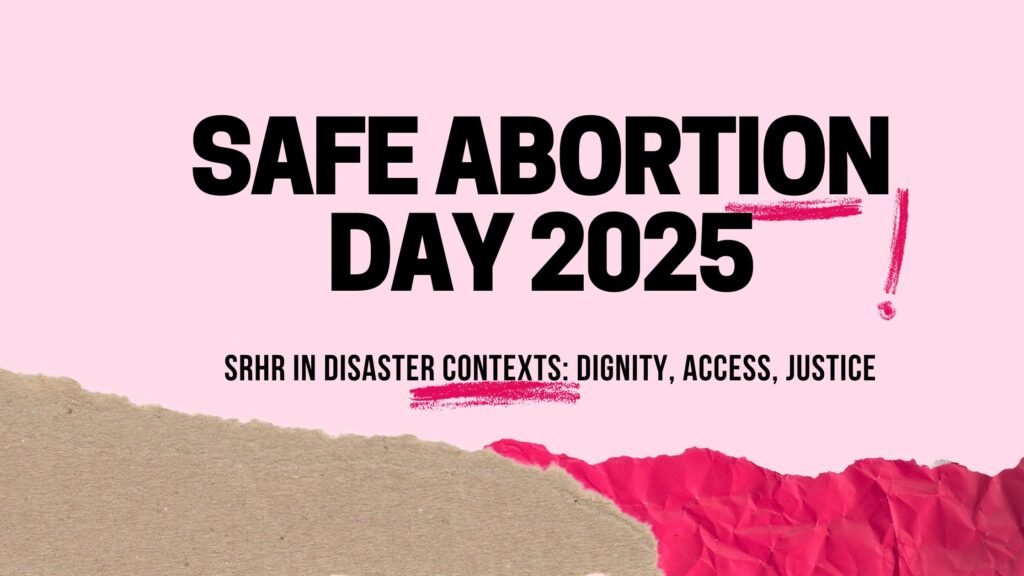
Dignity and Decisiveness in Disaster Contexts
Every year on 28 September, the world marks International Safe Abortion Day to affirm that safe, legal, and inclusive abortion care is a non-negotiable human right. This right upholds the bodily autonomy and reproductive freedom of all persons. This year, at the Diverse Empowerment Foundation (DEF), we look beyond stable times to reflect on what this right means for persons with disabilities and other marginalized groups in the face of escalating climate disasters and emergencies.
When Disaster Strikes, Rights Become Survival
Floods, droughts, landslides, and conflict do not pause human need—they amplify it. When communities are displaced, essential health infrastructure collapses, and isolation sets in, the need for sexual and reproductive health and rights (SRHR) services becomes a matter of survival.
Through our work and the findings of our recent Baseline Report on inclusive disaster preparedness in Mbale and Kasese Districts, we know that gender diverse persons with disabilities face acutely higher risks. These risks include escalated gender-based violence, higher rates of unintended pregnancies, and catastrophic barriers to accessing timely, safe abortion and post-abortion care.
Yet, in humanitarian response, SRHR is consistently deprioritized or treated as an afterthought.
The Cost of Exclusion in Crises
The exclusion of marginalized voices during crisis planning creates physical and informational barriers that are deadly:
Inaccessible Spaces: Emergency clinics and temporary shelters lack physical accessibility, rendering essential services unreachable for persons with disabilities.
Silence and Stigma: Information about SRHR services is rarely provided in accessible formats (such as plain language, Braille, or Sign Language), silencing survivors and denying them the right to informed consent.
Lack of Essential Care: When resources are scarce, comprehensive SRHR services, including contraception, safe abortion, and post-abortion care, are often the first to be cut, treating bodily autonomy as optional rather than essential.
Centering Bodily Autonomy and Dignity
For DEF, Safe Abortion Day serves as a powerful reminder that SRHR in disaster contexts must be inclusive from the outset. To protect every person’s right to make decisions about their own body during a crisis, we must:
Mandate Accessibility: Ensure that all emergency shelters, distribution points, and healthcare clinics are physically and informationally accessible to persons with all types of disabilities.
Integrate Comprehensive SRHR: Pre-position supplies and train staff to provide the full spectrum of SRHR services, prioritizing the continuity of safe abortion access.
Co-Create Solutions: Collaborate with disability-led and feminist organizations to design and deliver responses that are grassroots, informed by lived experience, and non-discriminatory towards SOGIESC individuals.
Our Call to Action on Safe Abortion Day
On this International Safe Abortion Day, we call on governments, humanitarian actors, and donors to recognize the intersectional crises faced by the most vulnerable and commit to change:
Move Beyond Tokenism: Integrate inclusive SRHR and gender justice into every phase of disaster preparedness and response planning, not just as a standalone project.
Invest in Equity: Fund disability-led and feminist organizations that are already reaching the most rural and marginalized communities with life-saving care.
Protect the Right to Decide: Uphold the right to safe, legal, and inclusive abortion care, ensuring it remains available, affordable, and accessible, regardless of floodwaters, displacement, or conflict.
Safe abortion is health care. Safe abortion is dignity. Safe abortion is a right, in every context.
Let us commit to building disaster responses that truly protect every person’s right to make decisions about their own body, regardless of the crisis.
#SafeAbortionDay #PrideInEveryIdentity #SRHRinCrises
Recent Posts
Ways To Give
Whatever form your support takes, it directly empowers Diverse persons with and without disabilities to build the futures they deserve.